International Business Trends 2026: Digital Transformation, Sustainability,
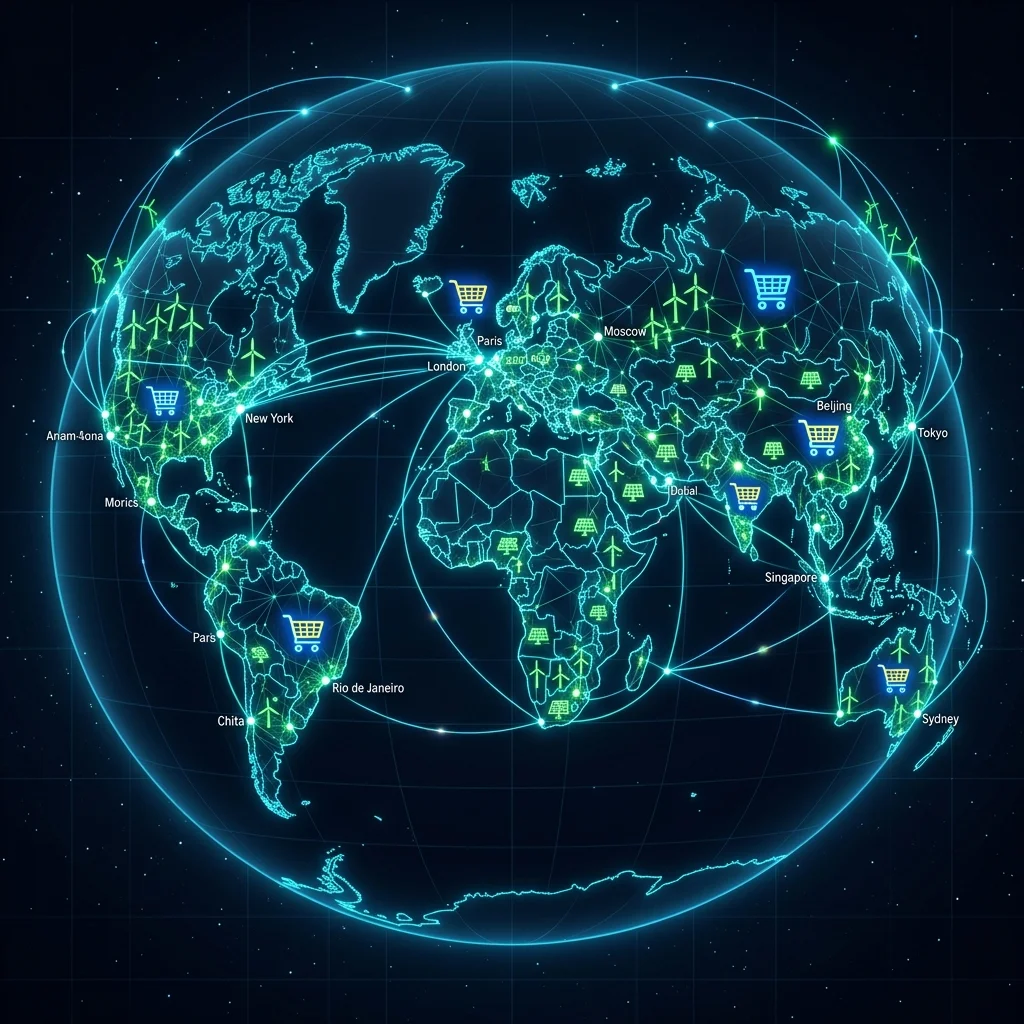
International Business Trends 2026: Digital Transformation, Sustainability, and Global Expansion Strategies
Introduction: The New Landscape of International Business
In 2026, the global business environment is shaped by four interconnected forces: rapid technological advancement, shifting geopolitical alliances, macroeconomic volatility, and deepening cultural complexity. Companies that once operated comfortably within national borders now find themselves navigating a web of digital trade routes, sustainability mandates, and fragmented regulatory landscapes. This year marks a pivot point—accelerated digital adoption, intensified by the post-pandemic shift, has become a baseline expectation rather than a competitive edge. Simultaneously, sustainability is no longer a voluntary initiative but a regulatory requirement and a consumer-driven imperative.
Strategic adaptability has never been more critical. The ability to anticipate disruptions, localize operations, and embed resilience into supply chains will separate winners from laggards in the race for global market share. As cross-border commerce reaches new heights—propelled by platforms like Amazon and Alibaba—executives must rethink traditional expansion playbooks. This article examines the core drivers reshaping international business in 2026, the persistent challenges companies face, and actionable strategies for thriving in a volatile global arena.
[IMAGE: A world map with glowing hotspots representing digital trade routes and emerging markets]
Core Drivers: Technology and Sustainability
Digital Transformation and Cross-Border E-Commerce
Digital transformation continues to erase physical boundaries, enabling businesses of all sizes to reach customers in distant markets. Cross-border e-commerce has become the backbone of international expansion, with platforms like Amazon offering localized storefronts, multilingual checkout experiences, and region-specific payment gateways. Alibaba’s digital ecosystem, from Tmall to Lazada, provides similar capabilities across Asia and beyond, allowing brands to test demand in emerging markets without heavy upfront infrastructure investment.
According to IBISWorld, the global cross-border e-commerce market is projected to grow at a compound annual rate exceeding 15% through 2026, driven by increasing internet penetration in Southeast Asia, Africa, and Latin America. Statista data further highlights that mobile commerce now accounts for over 60% of cross-border transactions in these regions, underscoring the need for mobile-first localization strategies.
Sustainability as a Competitive Differentiator
Sustainability has evolved from a corporate social responsibility talking point to a core competitive differentiator. Tesla’s green energy leadership exemplifies this shift—its vertically integrated battery supply chain and commitment to renewable energy have not only reduced its carbon footprint but also created a powerful brand narrative that resonates with environmentally conscious consumers worldwide. Regulatory tailwinds, such as the European Union’s Carbon Border Adjustment Mechanism and similar ESG reporting mandates in Asia and North America, are forcing companies to embed sustainability into every link of their value chains.
Emerging markets are driving demand for affordable clean-tech solutions. In Africa, solar-powered microgrids and low-cost electric vehicles are gaining traction, while Southeast Asian governments are incentivizing sustainable manufacturing practices. Companies that proactively adopt circular economy models—such as product-as-a-service or recyclable packaging—can capture premium positioning in these fast-growing regions.
[IMAGE: Infographic comparing global e-commerce growth rates vs. sustainability investment trends (2024-2026)]
Navigating Persistent Challenges
Despite the opportunities, international business in 2026 is fraught with obstacles that demand nuanced responses.
Cultural Differences and Localization Gaps
Cultural intelligence remains one of the most underestimated barriers to global success. Marketing campaigns that work seamlessly in New York can fall flat in Jakarta or Nairobi due to differences in communication styles, value systems, and consumption behaviors. The Cultural Intelligence Center notes that companies investing in cross-cultural training for their global teams see 30% higher employee retention and 25% faster ramp-up times in new markets. Yet many firms still rely on one-size-fits-all strategies, leading to costly missteps in branding, HR practices, and customer engagement.
Regulatory Compliance Across Jurisdictions
The regulatory landscape has become a minefield. Data privacy regulations like GDPR in Europe and CCPA in California are now joined by newer frameworks in Brazil (LGPD), India (DPDP Act), and China (PIPL). Tracking and complying with these evolving requirements demands significant legal expertise and continuous monitoring. Trade tariffs remain volatile, especially in US-China trade dynamics, where export controls on semiconductors and AI technologies have created supply chain disruptions. ESG reporting standards, while standardized in some regions, diverge widely, forcing multinationals to maintain multiple reporting frameworks.
Economic Instability and Currency Fluctuations
Currency volatility, persistent inflation in some developed markets, and geopolitical tensions (such as the ongoing conflict in Ukraine and instability in the Middle East) are creating uncertainty for cross-border transactions. Companies that export or import face margin compression when exchange rates swing unpredictably. Brazil’s real, Nigeria’s naira, and Turkey’s lira have experienced sharp devaluations, impacting payment processing and profit repatriation.
Supply Chain Disruptions and Geopolitical Shocks
The COVID-19 pandemic and the Red Sea crisis exposed the fragility of just-in-time supply chains. In 2026, businesses are still grappling with the fallout of these events, alongside new disruptions from climate-related disasters and trade route blockades. Single-sourcing from low-cost countries is increasingly seen as a liability. The semiconductor shortage, for instance, continues to ripple through automotive and electronics industries, underscoring the need for resilient multi-sourcing strategies.
Technological Disparities
While digital tools enable global reach, significant technological disparities persist between developed and developing markets. High internet costs in parts of Africa, limited payment infrastructure in rural India, and low smartphone penetration in some Latin American regions hinder seamless integration. Companies must adapt their digital offerings—such as offering USSD-based payments or offline-capable apps—to bridge these gaps.
[IMAGE: A diagram showing a supply chain with red flags at vulnerable nodes and green arrows for alternative routes]
Strategic Solutions for Global Success
Cultural Sensitivity Training and Local Partnerships
Investing in cultural intelligence is no longer optional. Companies should partner with organizations like the Cultural Intelligence Center to train employees in recognizing and adapting to cultural norms. Beyond training, forming joint ventures with local firms can provide invaluable on-the-ground insights. For example, a Western retailer entering India might collaborate with a local logistics provider to navigate complex last-mile delivery in tier-2 cities.
Legal Expertise and Compliance Automation
To manage regulatory complexity, businesses are turning to compliance automation tools from SAP and Oracle that track legislative changes in real time and generate region-specific reports. Hiring in-house legal teams with regional expertise remains essential, but automation reduces the risk of oversight. For smaller firms, subscribing to third-party compliance platforms like ComplyCube or OneTrust can provide cost-effective coverage.
Economic Risk Management
Hedging strategies—such as forward contracts and currency swaps—help stabilize cash flows. Diversifying currency exposure by maintaining bank accounts in multiple jurisdictions and holding a basket of stable currencies (USD, EUR, JPY) can mitigate volatility. Scenario planning, where teams model the impact of a 10% currency swing or a sudden tariff hike, prepares executives to pivot quickly.
Technology Investments in AI, Blockchain, and Cloud
Artificial intelligence is transforming customer insights. Tools like Google Analytics and HubSpot now offer predictive analytics that identify emerging market trends before competitors. Blockchain is gaining traction for supply chain transparency, enabling companies to verify the provenance of raw materials and ensure ethical sourcing. Cloud infrastructure from AWS, Azure, and Alibaba Cloud allows businesses to scale operations without heavy capital expenditure, particularly important when entering new markets with uncertain demand.
Building Resilient Supply Chains
The mantra of 2026 is “resilience over efficiency.” Companies are shifting from just-in-time to just-in-case models, holding safety stock of critical components. Nearshoring—moving production closer to end markets—has accelerated, with Mexico and Vietnam emerging as manufacturing hubs for North American and Asian markets, respectively. Red Sea crisis lessons have also spurred investment in alternative shipping routes and digital tracking systems that provide real-time visibility into cargo movement.
Inventory optimization using AI-driven demand forecasting reduces overstock while ensuring availability. Multi-sourcing for key raw materials, such as lithium for batteries or rare earth elements for electronics, spreads risk across suppliers in different geopolitical zones.
Case Studies: Learning from Industry Leaders
Amazon: Localized Cross-Border E-Commerce
Amazon’s success in cross-border e-commerce stems from deep localization. In India, it introduced a payment system that accepts cash on delivery and local wallets like Paytm. In Japan, it optimized its website for vertical text and integrated with the country’s intricate logistics network for same-day delivery. By tailoring every touchpoint—from language to payment to packaging—Amazon has built trust in diverse markets.
Tesla: Green Energy Leadership on a Global Scale
Tesla’s expansion into China and Europe demonstrates how sustainability can drive market entry. Its Gigafactories in Shanghai and Berlin not only reduce shipping costs but also leverage local renewable energy credits. Tesla’s vertical integration—owning battery production, solar panel manufacturing, and charging infrastructure—allows it to maintain tight control over its carbon footprint, appealing to regulators and environmentally conscious buyers alike.
Alibaba: Digital Transformation for Emerging Markets
Alibaba’s cloud division has been instrumental in enabling SMEs in Southeast Asia and Africa to digitize their operations. Through its “eWTP” (Electronic World Trade Platform), Alibaba provides small businesses with access to cross-border logistics, financing, and digital marketing tools. This ecosystem model lowers the barrier to entry for companies that would otherwise struggle with the complexities of international trade.
Conclusion: Charting a Course for 2026 and Beyond
International business in 2026 is defined by convergence—of technology and sustainability, of local and global, of risk and opportunity. The trends outlined here—digital transformation, sustainability imperatives, and global expansion strategies—are not passing fads but structural shifts that will intensify in the years ahead. Success demands a holistic approach: cultural sensitivity, regulatory agility, economic risk management, technological investment, and supply chain resilience must work in tandem.
Companies that treat international business as a series of discrete challenges will fall behind. Those that embed these strategies into their core operations—and remain adaptable to the next disruption—will not only survive but thrive in the volatile yet promising landscape of global commerce.
[IMAGE: A futuristic global map with glowing digital lines connecting major cities, green energy symbols, and e-commerce icons hovering over key regions]