How the Baby Food Industry''s Global Strategies Undermine Breastfeeding and
``markdownHow the Baby Food Industry's Global Strategies Undermine Breastfeeding and Public Health: A Deep Dive into Market and Political Power
The Unseen Engine: How a $55 Billion Industry Reshapes Infant Feeding
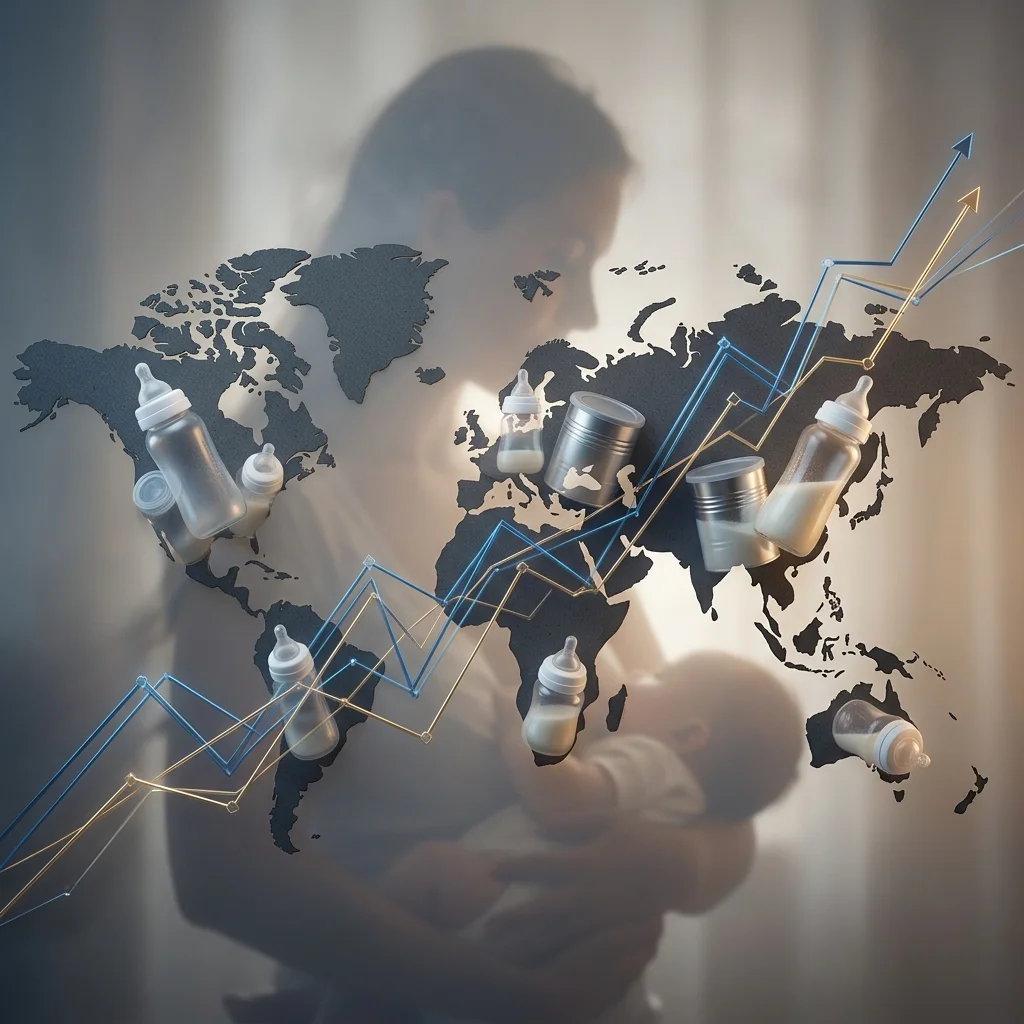
In 1978, the global infant formula market was worth US$1.5 billion. By 2019, that figure had exploded to US$55.6 billion—a 37-fold increase in four decades. Behind this staggering growth lies a story not of organic demand, but of deliberate corporate strategy. The transnational baby food industry has systematically expanded its reach into every corner of the globe, transforming first‑foods systems in ways that directly conflict with public health goals. This expansion is not accidental; it is the product of an integrated playbook that combines aggressive marketing, product diversification, and sophisticated political influence.
At the heart of the tension is the International Code of Marketing of Breastmilk Substitutes, adopted by the World Health Assembly in 1981. The Code aims to protect breastfeeding by restricting the promotion of formula, bottles, and teats. Yet decades later, compliance remains patchy, and the industry continues to find new channels to reach parents. The scale of the market—now larger than the entire global coffee trade—reflects a fundamental misalignment between corporate growth imperatives and the evidence‑based recommendation that infants should be exclusively breastfed for the first six months. This article unpacks the hidden economic logic, innovation patterns, and policy implications that demand urgent global attention.
[IMAGE: A split image: left side showing a mother breastfeeding in a rural setting, right side showing a supermarket aisle packed with formula products.]
Two Axes of Expansion: Geographical Reach and Product Diversification
The industry’s growth has been driven along two primary axes: widening geographical reach and broadening product ranges. In high‑income countries where birth rates are stagnating and breastfeeding rates are relatively high, the market for standard infant formula is mature. To maintain revenue growth, transnational companies have turned to the Global South—Asia, Africa, and Latin America—where rising middle classes, urbanization, and weak regulatory environments create new frontiers.
According to trade data, low‑ and middle‑income countries now account for the majority of volume growth in the infant formula market. In East Asia, particularly China, the market has grown so rapidly that it now represents nearly half of global sales. Meanwhile, sub‑Saharan Africa has become a key target for expansion, with multinational companies investing heavily in local production facilities and distribution networks. This geographic push is often accompanied by marketing tactics that exploit cultural perceptions of modernity and status, positioning formula as a symbol of affluence and scientific progress.
The second axis of expansion is product diversification. Beyond standard infant formula (0–6 months), companies have introduced follow‑up formulas (6–12 months), toddler milks (12–36 months), and a dizzying array of specialized products: organic, hypoallergenic, lactose‑free, “brain development,” “immune support,” and formulas for premature infants. This line extension blurs the boundary between medical necessity and lifestyle choice. Toddler milks, for example, are largely unnecessary from a nutritional standpoint—most toddlers can obtain adequate nutrients from family foods—yet they are marketed as essential for growth and development, extending the period during which parents purchase company products.
The timeline from the 1978 to 2019 market surge confirms that this two‑pronged strategy has been remarkably effective. The result is a market that has become not only larger but also more resilient: when one product category or region slows, another takes its place.
[IMAGE: Infographic showing two arrows: one arrow stretching from high-income to low-income countries, another arrow showing the expanding product shelf from infant to toddler to specialized.]
The Marketing Machine: Health Systems, Digital Ads, and Corporate Science
To sustain this expansion, the industry has built a sophisticated marketing machine that operates on multiple fronts. One of its most powerful levers is marketing through health systems. Companies deploy sales representatives to hospitals, sponsor nurse training programs, and provide free samples to new mothers. These practices create a “halo effect” of medical legitimacy—when a formula company’s logo appears in a hospital brochure or a nurse recommends a specific brand, parents naturally trust that endorsement as authoritative. Despite the International Code’s prohibition on such practices, they remain widespread, particularly in countries where enforcement is weak.
Mass‑media and digital advertising provide a second channel. Social media influencers, targeted online ads, and peer‑to‑peer marketing have become central to the industry’s playbook. A 2020 study found that formula companies invest heavily in Instagram and Facebook campaigns that frame formula as a lifestyle choice rather than a commercial product. These campaigns circumvent traditional warnings by using parent‑to‑parent language and emotional appeals—often featuring images of smiling babies and happy families—rather than explicit health claims that would trigger regulatory scrutiny.
A third, less visible, front is corporate‑funded science. The industry pours millions of dollars into research that frames infant formula as “closing the gap” between breastfeeding and optimal nutrition. Industry‑funded studies often highlight specific ingredients—like DHA, prebiotics, or hydrolyzed proteins—that their own products contain, while downplaying the overall superiority of breast milk. These studies are then cited in marketing materials, regulatory submissions, and policy debates, creating a circular logic where corporate research shapes the very evidence base used to evaluate the products. This practice is particularly insidious because it influences perceptions not only among parents but also among health professionals and policymakers, who may not realize the funding source of the studies they trust.
[IMAGE: Screenshot of a social media feed showing a formula advertisement with a smiling baby and hashtags like #NewMomLife, overlaid with a faint "Sponsored" tag.]
The Political Playbook: Lobbying, Trade Rules, and Blocking Regulation
The industry’s market power is matched by its political power. Transnational baby food companies engage in extensive lobbying at national and international levels, aiming to weaken or delay implementation of the International Code and related public health policies. In the United States, for example, the formula industry has successfully blocked efforts to include stronger breastfeeding protections in federal legislation, arguing that such measures would limit parental choice and infringe on commercial speech.
One of the most effective political tools is the use of trade rules. When countries such as Thailand, India, or Mexico have attempted to strengthen their domestic code implementation—for instance, by banning misleading labels on toddler milk or restricting advertising in health facilities—the industry has challenged these measures as violations of World Trade Organization (WTO) agreements. They argue that such regulations constitute unnecessary barriers to trade, even when the regulations are clearly aimed at protecting public health. These disputes can drag on for years, chilling other governments from taking regulatory action.
Another strategy is the generation of favorable research to block regulation. Industry‑funded economic studies often claim that strict marketing restrictions would harm the formula market, reduce consumer choice, or even increase infant mortality by driving formula underground. While these claims are generally unsupported by independent evidence, they are effective in creating doubt among legislators and the public. The industry also funds advocacy groups and professional associations that promote “formula‑friendly” messaging, blurring the line between independent health advice and corporate interest.
The cumulative effect of these political practices is a regulatory environment that remains far weaker than the evidence demands. The International Code, while endorsed by 194 countries, has been fully implemented into domestic law by only a minority of nations. Even in countries with strong codes, enforcement is often lax, and the industry continues to find loopholes. For example, the Code applies to products for infants up to 12 months, but toddler milks (marketed for children up to three years) fall outside its scope—a loophole that companies have exploited aggressively.
[IMAGE: A courtroom or conference room scene with documents labeled "WTO Trade Dispute" on a table, with baby formula tins in the background.]
The Public Health Toll: Breastfeeding Barriers and Hidden Costs
The consequences of this industry-driven system are profound. Despite decades of public health campaigns, global breastfeeding rates have stagnated, and in many countries, they are declining. According to UNICEF and the World Health Organization, only about 40% of infants under six months are exclusively breastfed—far short of the global target of 70% by 2030. The industry’s marketing tactics directly undermine breastfeeding by normalizing formula use, creating doubt about milk supply, and positioning formula as a convenient, modern alternative.
The economic logic behind this is stark: every additional month of breastfeeding represents lost revenue for formula companies. A mother who breastfeeds exclusively for six months will not purchase any formula during that period, while a mother who switches to formula by six weeks will purchase multiple tins per month for the next year and a half. This incentive drives the industry to target new mothers at their most vulnerable moment—immediately after birth—when hospital marketing can have the greatest impact.
The hidden costs extend beyond individual families to the entire health system. Breastfeeding reduces the incidence of diarrheal diseases, respiratory infections, and certain childhood cancers, leading to lower healthcare costs. A 2016 study estimated that if breastfeeding rates in the United States reached recommended levels, the country would save US$3 billion per year in medical costs and premature deaths. Globally, the savings would run into tens of billions. Yet these costs are invisible to the market; they are borne by public health systems, not by formula companies.
Furthermore, the industry’s expansion into low‑income countries raises serious equity concerns. In communities where clean water and adequate sanitation are not guaranteed, formula feeding can be deadly. The 2019 Abbott formula contamination scandal in China, where powdered formula was linked to infant deaths, is a stark reminder of the risks when formula replaces breastfeeding in environments with weak regulatory oversight.
[IMAGE: A chart comparing exclusive breastfeeding rates in different regions over time, with a downward trend in middle-income countries.]
Conclusion: Toward an Industry Deep Audit and Policy Reform
The global infant formula market is not merely a reflection of consumer demand; it is a carefully engineered system that has used market power, product innovation, and political influence to reshape infant feeding on a planetary scale. As the industry continues to grow—projected to reach over US$100 billion by 2030—the public health community faces an urgent challenge. The International Code of Marketing of Breastmilk Substitutes remains the cornerstone of protection, but it is insufficient when unenforced and undercut by powerful corporate actors.
What is needed is an industry deep audit: a systematic, independent examination of the marketing, political, and scientific strategies employed by transnational baby food companies. Such an audit could provide the evidence base for stronger regulation, including closing the toddler‑milk loophole, banning hospital promotions, and restricting digital advertising. Trade rules must be reformed to prevent companies from using them to block legitimate public health measures. And governments must recognize that protecting breastfeeding is not just a health policy—it is a matter of economic justice, child survival, and equitable development.
The $55 billion question is whether the world will act before the next generation of infants is permanently shaped by a market that puts profit before health.
[IMAGE: A political sign in front of a government building reading "Protect Breastfeeding – Enforce the Code," with a crowd of mothers and health workers.]
``